
Key Takeaways
- Appetite, metabolism, and nutritional needs change with age, making balanced meals increasingly important.
- Common challenges like reduced appetite, mobility limitations, and dental issues can affect healthy eating but often have practical solutions.
- Families can support healthier habits by planning meals, encouraging hydration, and keeping nutritious snacks readily available.
- Sharing meals with others can improve consistency while making mealtimes more enjoyable and socially engaging.
- Senior living communities support nutrition through chef-prepared meals, personalized dining options, and consistent meal schedules.
Nutrition and Aging: What You Should Know
As people grow older, their nutritional needs change. Muscle mass naturally declines, metabolism slows, and certain health conditions or medications can affect appetite and digestion. Even older adults who have always maintained healthy eating habits may find that the foods they enjoy or the amount they eat begin to change over time.
For family members, these changes can raise questions about whether a loved one is getting the nutrition they need. Fortunately, many common challenges have practical solutions. From understanding barriers to healthy eating to building better daily habits, the right support can help older adults maintain their health and enjoy mealtimes again.
Common Barriers to Healthy Eating and How to Overcome Them
Eating well isn’t always as simple as choosing healthy foods. Many older adults face everyday challenges that affect what, when, and how much they eat. Understanding these barriers can help families provide the right support while encouraging healthier habits.
Changes in Appetite and Taste
Aging, medications, and certain health conditions can reduce appetite or change how foods taste and smell. When meals become less appealing, older adults may eat less than their bodies need. Serving smaller, nutrient-rich meals and adding fresh herbs or other natural seasonings can help make eating more enjoyable.
Difficulty Shopping and Cooking
Mobility limitations, fatigue, or transportation challenges can make grocery shopping and meal preparation difficult. As a result, healthy meals may become less frequent or be replaced with convenient processed foods. Helping with meal planning, grocery shopping, or preparing meals ahead of time can make nutritious eating much easier.
Dental or Swallowing Difficulties
Problems with chewing or swallowing often cause older adults to avoid foods that provide important nutrients. Softer options like yogurt, soups, cooked vegetables, eggs, and smoothies can make meals more comfortable without sacrificing nutrition. If swallowing problems become frequent, it’s important to discuss them with a healthcare provider.
Tips for Helping an Older Loved One Build Healthier Eating Habits
Healthy eating habits often develop through small, consistent changes instead of major lifestyle adjustments. Family members can provide encouragement while helping create routines that make balanced nutrition easier to maintain every day.
Build Balanced Meals
Including lean proteins, whole grains, fruits, vegetables, and healthy fats helps provide the nutrients older adults need throughout the day. A balanced plate also supports steady energy and overall wellness. Simple meals with familiar foods are often easier to maintain over time.
Encourage Regular Hydration
Many older adults don’t feel thirsty as often, increasing the risk of dehydration. Offering water regularly and serving foods with high water content, such as fruit, vegetables, and soups, can help support healthy hydration. Keeping a favorite water bottle nearby may also encourage more frequent drinking.
Plan Meals Together
Meal planning helps reduce stress while ensuring healthier options are available throughout the week. Involving your loved one in choosing meals also helps preserve independence and increases the likelihood they’ll enjoy what they’re eating. Even planning a few meals ahead can make healthy choices more convenient.
Keep Nutritious Snacks Available
Healthy snacks provide extra nutrition between meals, especially for older adults with smaller appetites. Options like yogurt, fresh fruit, cheese, nuts, or whole-grain crackers are easy to prepare and can help meet daily nutritional needs. Keeping these foods within easy reach also encourages healthier choices.
Make Mealtimes Social
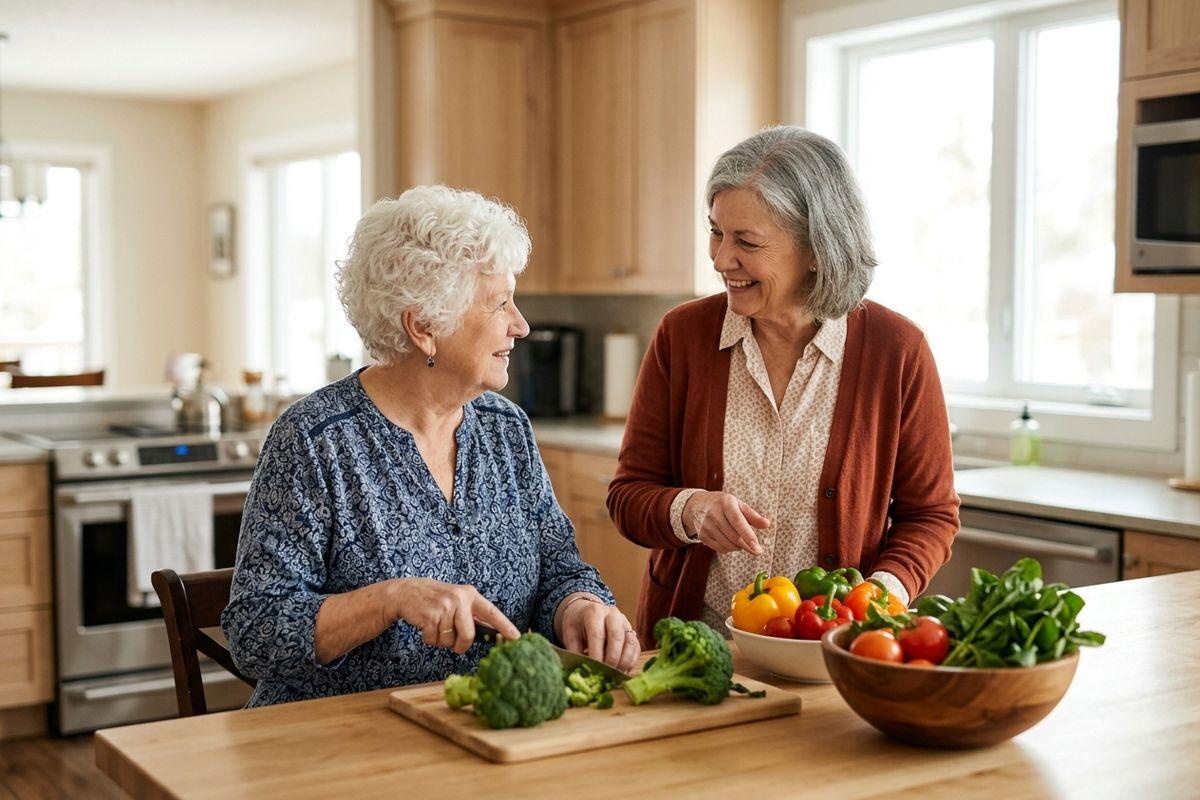
Sharing meals with family, friends, or neighbors can make eating more enjoyable and encourage consistent routines. Conversation often helps older adults stay engaged during meals while reducing feelings of isolation. Even a few shared meals each week can support healthier eating habits.
Nutrition and Dining in Senior Living
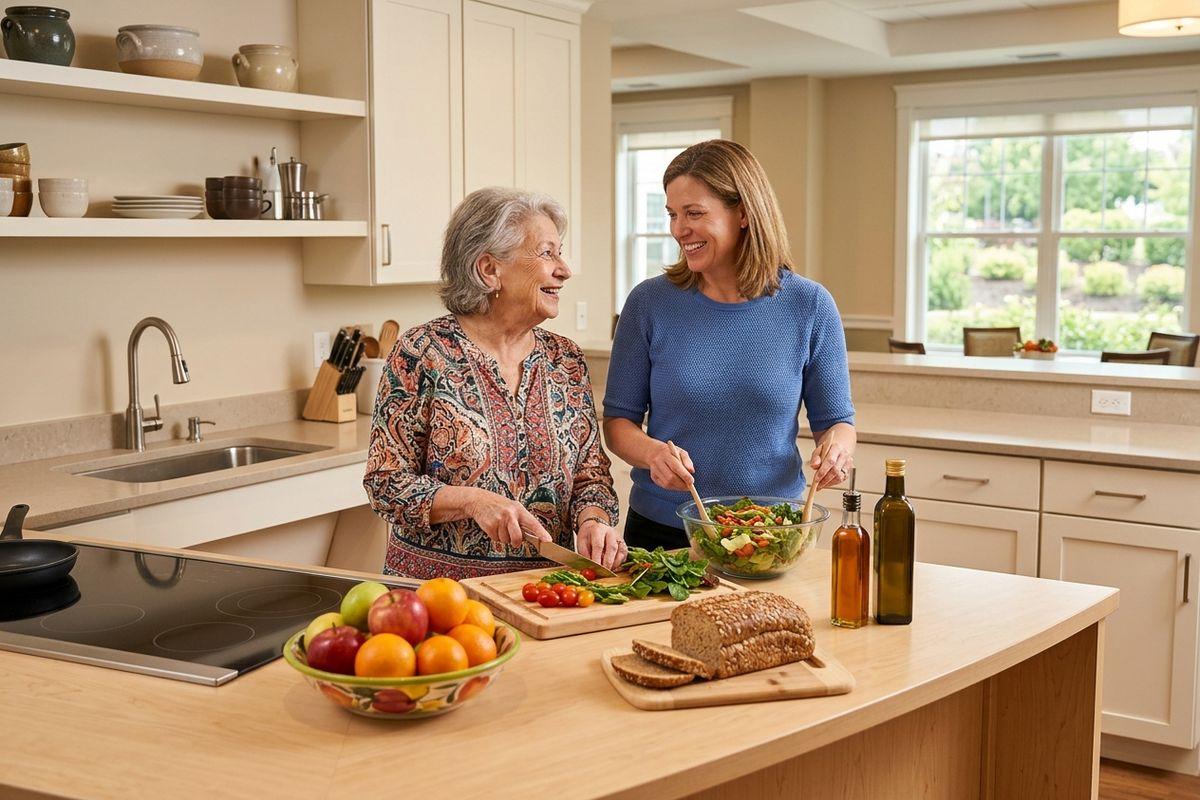
Preparing healthy meals every day can become more difficult as needs change, but that doesn’t mean nutrition has to suffer. Senior living communities help remove many of the barriers that make balanced eating challenging while creating welcoming dining experiences that encourage healthy routines.
Many communities support residents through services such as:
- Chef-prepared meals made with balanced nutrition in mind
- Menus that accommodate dietary needs and personal preferences
- Consistent meal schedules that encourage healthy routines
- Comfortable dining spaces that promote social connection
- Assistance during meals when additional support is needed
- Menu variety that provides both nutrition and choice
These services help make healthy eating a consistent and enjoyable part of daily life.
How All American Assisted Living at Londonderry Supports Healthy Eating
Healthy eating plays an important role in supporting strength, energy, and overall wellness throughout the aging process. While every older adult has unique nutritional needs, the right support and consistent access to balanced meals can make maintaining healthy habits much easier for both seniors and their families.
At All American Assisted Living at Londonderry, we create dining experiences that combine nutritious, chef-prepared meals with a welcoming atmosphere where residents can enjoy every meal. If you’re exploring senior living for a loved one, schedule a tour today to learn how our community supports healthy eating and overall well-being.